TLDR
The FDA and the Undersea and Hyperbaric Medical Society (UHMS) recognize 14 medical conditions for which hyperbaric oxygen therapy (HBOT) is an approved, evidence-based treatment. For patients with these conditions, FDA-approved HBOT is typically covered by Medicare and most PPO insurance plans. This guide covers every one of the 14 indications, explains the difference between on-label and off-label use, and clarifies what FDA approval means for your wallet and your care.
Table of Contents
- What Is FDA-Approved Hyperbaric Oxygen Therapy?
- FDA-Approved vs. Off-Label HBOT: What Is the Difference?
- Why FDA Approval Matters for Insurance Coverage
- The 14 FDA-Approved HBOT Indications Explained
- Frequently Asked Questions
- HBOT at OxygenWell: Expertise Across All 14 Indications
What Is FDA-Approved Hyperbaric Oxygen Therapy?
Hyperbaric oxygen therapy (HBOT) is a medical treatment in which a patient breathes 100% pure oxygen inside a pressurized chamber at greater than one atmosphere of pressure. Under these conditions, oxygen dissolves directly into the blood plasma, cerebrospinal fluid, lymph, and tissues — delivering therapeutic levels of oxygen to areas the body cannot reach through normal circulation alone.
The FDA has cleared HBOT as a medical device (the hyperbaric chamber itself) for the treatment of specific conditions backed by rigorous clinical evidence. The Undersea and Hyperbaric Medical Society (UHMS), recognized by the FDA as the authoritative body for hyperbaric medicine, defines and periodically updates the official approved indications list. As of the UHMS 14th Edition Indications book, there are 14 UHMS-approved/FDA-recognized HBOT indications.
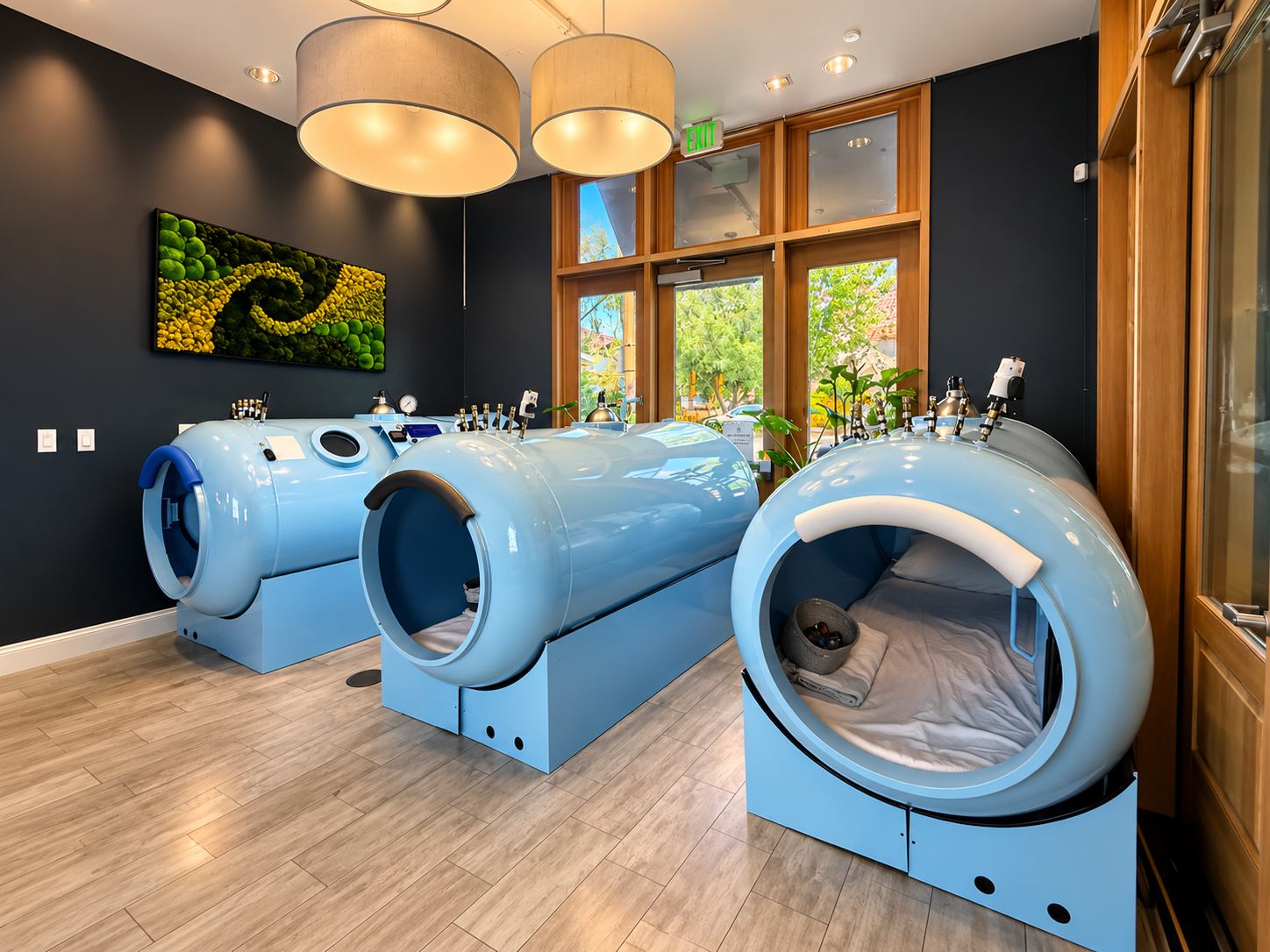
At OxygenWell, our physician-owned facility in Sherman Oaks and Calabasas, California, treats all 14 FDA-approved conditions with medical-grade monoplace chambers pressurized up to 2.4 ATA — the full rated level, not a reduced or "adjusted" pressure as seen at many non-medical centers.
FDA-Approved vs. Off-Label HBOT: What Is the Difference?
An FDA-approved (also called "on-label") HBOT indication is one that has been rigorously studied and formally recognized by both the FDA and the UHMS. The scientific evidence — drawn from clinical trials, systematic reviews, and decades of clinical data — supports the therapy as safe and effective for that specific condition.
Off-label HBOT refers to the use of hyperbaric oxygen for conditions outside the 14 approved indications. This does not mean the treatment is experimental or unsafe. Off-label prescribing is a standard and widely accepted practice in all fields of medicine. Physicians routinely prescribe FDA-approved drugs and devices for conditions beyond their original approval when clinical judgment and emerging evidence support it. Conditions such as traumatic brain injury, stroke recovery, long COVID, and autism spectrum disorder are actively studied under off-label HBOT protocols.
The critical practical difference: insurance covers on-label conditions; it rarely covers off-label use. Patients pursuing off-label HBOT typically pay out of pocket. For the 14 FDA-approved indications, however, Medicare Part B and most PPO plans cover HBOT when medical necessity criteria are met and the treating facility meets compliance standards.
Why FDA Approval Matters for Insurance Coverage
The path from "FDA-approved condition" to insurance reimbursement requires several layers of compliance. Most patients never think about this — until their claim is denied.
To qualify for insurance coverage of HBOT, three conditions generally must be met:
- The diagnosis must be on the approved list. Medicare and major commercial insurers (Aetna, Cigna, UnitedHealthcare, Anthem, Blue Shield) align their coverage policies closely with the UHMS/FDA-approved indication list.
- The patient must meet medical necessity criteria. For example, Medicare covers HBOT for diabetic foot ulcers only when the wound is Wagner Grade III or higher and has failed an adequate course of standard wound care.
- The facility must meet compliance standards. The FDA recommends patients receive HBOT at facilities accredited by the UHMS. A physician must be present or immediately available during every treatment. California law further requires that hyperbaric facilities be physician-owned — a compliance standard that most non-hospital HBOT centers in the state do not meet.
OxygenWell is physician-owned by Dr. Beth Meneley, DAOM, L.Ac., and Dr. Erika Kalash, DO, and accepts Medicare and PPO insurance for all 14 FDA-approved conditions. Our dedicated billing team handles pre-authorization to remove the administrative burden from patients and their families.
The 14 FDA-Approved HBOT Indications Explained
1. Diabetic Wounds of the Lower Extremities (Wagner Grade III or Higher)
Diabetes impairs circulation and nerve function, slowing wound healing to a crawl. Wagner Grade III ulcers — deep wounds that reach tendon, capsule, or bone — carry a significant risk of amputation when standard wound care fails. HBOT saturates oxygen-deprived tissue, stimulates angiogenesis (new blood vessel formation), and mobilizes stem cells that accelerate closure. Research shows HBOT produces up to 4x higher healing rates versus standard care alone (UHMS Clinical Practice Guidelines, 2015). Medicare Part B covers HBOT for this indication when all criteria are met.
2. Delayed Radiation Injury (Osteoradionecrosis, Soft Tissue Radionecrosis, Radiation Cystitis, Radiation Proctitis)
Radiation therapy saves lives, but it can permanently damage the microvasculature of tissues in the treatment field — causing bone death (osteoradionecrosis/ORN), soft tissue breakdown, bladder inflammation (radiation cystitis), and bowel injury (radiation proctitis) months or years after treatment ends. HBOT reverses radiation-induced hypoxia, stimulates collagen synthesis, and promotes neovascularization in these chronically injured tissues. The Marx Protocol — now a worldwide standard — reduced ORN incidence from 29.9% to 5.4% in mandibular surgery patients (Marx RE et al., 1985). OxygenWell treats radiation injury at 2.0–2.4 ATA for 90 minutes per session, typically over 20–40 sessions.
3. Skin Grafts and Flaps (Compromised)
After reconstructive surgery — whether following cancer resection, trauma, or elective procedures — skin grafts and flaps depend on oxygen-rich blood for survival. When perfusion is compromised by poor circulation, prior radiation, or surgical tension, tissues fail to heal and the graft or flap can die. HBOT increases the partial pressure of oxygen in marginal tissues and stimulates the growth of new capillaries that support graft take. Clinical studies show flap survival rates improve by up to 2x with adjunctive HBOT (Durham WP et al., Plast Reconstr Surg, 2017). Insurance may cover HBOT for this indication when compromised perfusion or ischemia is documented.
4. Osteomyelitis (Refractory Chronic)
Chronic osteomyelitis — a bone infection that fails to resolve with standard antibiotics and surgery — creates a hypoxic, avascular environment that shields bacteria from immune cells and makes antibiotic delivery nearly impossible. HBOT restores oxygen levels to infected bone, making it hostile to anaerobic bacteria while enhancing the killing ability of white blood cells (which require oxygen to function optimally). HBOT also potentiates the bactericidal effect of certain antibiotics. For refractory cases where standard care has failed, HBOT represents a clinically validated adjunctive option with strong UHMS support.
5. Necrotizing Soft Tissue Infections (Including Fournier's Gangrene)
Necrotizing fasciitis and related life-threatening soft tissue infections spread rapidly, destroying muscle and fascia in hours. The pathogens — often polymicrobial including anaerobic organisms — thrive in the oxygen-poor environment created by tissue destruction. As an adjunct to emergency surgery and broad-spectrum antibiotics, HBOT creates a toxic oxygen environment for anaerobic bacteria, reduces toxin production, and preserves viable tissue at wound margins. Several retrospective studies and case series show improved survival rates with adjunctive HBOT in these rare but devastating infections.
6. Gas Gangrene (Clostridial Myositis and Myonecrosis)
Gas gangrene caused by Clostridium perfringens is a true surgical and medical emergency. The organism produces alpha-toxin that rapidly destroys muscle and spreads through fascial planes. HBOT is used as an emergency adjunct to surgical debridement and antibiotics: high-pressure oxygen directly inhibits alpha-toxin production and creates an environment in which clostridial organisms cannot survive. Standard protocol calls for three HBOT treatments within the first 24 hours when feasible. The survival benefit of early HBOT in gas gangrene is well-established in the UHMS literature.
7. Air or Gas Embolism
Air or gas emboli can enter the bloodstream during surgery, trauma, certain medical procedures, or decompression events. These bubbles obstruct blood flow to critical organs — most dangerously the brain and heart — within seconds to minutes. HBOT is the primary treatment: pressure physically compresses and shrinks the gas bubbles while 100% oxygen accelerates bubble reabsorption and reduces ischemic injury. Treatment must begin as rapidly as possible after onset.
8. Decompression Sickness (The "Bends")
Decompression sickness occurs when a diver ascends too rapidly, causing dissolved nitrogen in the tissues to form bubbles — much like carbonation when a soda bottle is opened. Symptoms range from joint pain and skin rashes to neurological deficits and paralysis. HBOT is the definitive treatment: pressure recompresses nitrogen bubbles while oxygen breathing accelerates nitrogen elimination and reduces tissue injury. The UHMS recommends specific recompression tables (USN Treatment Tables 5 and 6) for managing DCS. Early treatment produces the best outcomes.
9. Carbon Monoxide Poisoning (Including Cyanide Poisoning)
Carbon monoxide binds hemoglobin with 200–250x the affinity of oxygen, displacing oxygen from red blood cells and causing cellular asphyxiation. Breathing 100% oxygen at sea level reduces the half-life of carboxyhemoglobin from roughly 5 hours to about 90 minutes. At 3 ATA in a hyperbaric chamber, that half-life drops to approximately 23 minutes. HBOT also reduces delayed neurological sequelae — cognitive deficits, memory problems, and personality changes that can appear weeks after apparent recovery from CO exposure. HBOT is the standard of care for moderate-to-severe CO poisoning and is particularly critical in cases involving cyanide co-poisoning, pregnancy, or neurological symptoms.
10. Crush Injury, Compartment Syndrome, and Acute Traumatic Ischemia
Crush injuries, compartment syndrome, and other acute traumatic ischemias create a dangerous cycle: swelling cuts off blood supply, oxygen-starved tissue swells more, and more blood supply is lost. HBOT breaks this cycle by delivering oxygen directly through plasma (bypassing blocked red blood cells), reducing edema by causing vasoconstriction, and preserving tissue viability at the margins of injury. As an adjunct to surgical decompression and revascularization, HBOT has been shown to reduce reperfusion injury and improve limb salvage rates in severe traumatic cases.
11. Intracranial Abscess
Intracranial (brain) abscesses are collections of infection within the brain tissue that create a severely hypoxic core where standard antibiotics cannot penetrate effectively. HBOT raises dissolved oxygen levels in brain tissue, improves leukocyte function at the infection site, and may reduce the edema associated with the abscess. Used as an adjunct to neurosurgical drainage and targeted antibiotic therapy, HBOT can help in cases where repeated surgical intervention carries unacceptable risk or in patients who are not surgical candidates.
12. Thermal Burns (Severe)
Severe thermal burns cause progressive tissue death far beyond the initial injury zone due to local edema, hypoxia, and inflammatory mediators. As an adjunct to burn wound care, HBOT reduces edema, limits the conversion of superficial "zone of stasis" burns to deeper full-thickness burns, promotes faster epithelialization, and reduces infection rates by enhancing leukocyte killing of bacteria. Studies show adjunctive HBOT can shorten hospital length of stay and reduce the number of surgical procedures required in severe burns. HBOT is typically initiated within 24–48 hours of the burn injury for maximum effect.
13. Central Retinal Artery Occlusion (CRAO)
CRAO is the ocular equivalent of a stroke — a sudden blockage of the central retinal artery that causes the retina to die within hours. Without treatment, permanent vision loss is common. Because HBOT delivers oxygen to the retina by dissolving it directly into plasma (bypassing the blocked artery entirely), it represents the best available emergency intervention for CRAO. The treatment window is tight: HBOT must begin within the first 24 hours, ideally within 6–12 hours, for the best chance of vision recovery. Standard protocol calls for 20–40 sessions at 90–120 minutes per session. OxygenWell accepts urgent CRAO cases and can coordinate same-day treatment when availability permits. Call (818) 661-0939 immediately if you or a loved one experiences sudden vision loss.
14. Idiopathic Sudden Sensorineural Hearing Loss (ISSHL)
Sudden sensorineural hearing loss — defined as a loss of 30 dB or more across three consecutive frequencies occurring within 72 hours — has no clearly identified cause in most cases. The current leading hypothesis implicates microvascular disruption and hypoxia in the cochlea. Because the cochlea has extraordinarily high oxygen demands and extremely limited collateral circulation, it is highly sensitive to ischemia. HBOT, particularly when initiated within 2–4 weeks of symptom onset, has been shown in multiple clinical trials to significantly improve hearing recovery, especially when combined with corticosteroid therapy. The earlier treatment begins, the better the outcome.
Frequently Asked Questions About FDA-Approved HBOT
How many conditions are FDA-approved for hyperbaric oxygen therapy?
The FDA and the UHMS currently recognize 14 conditions for which HBOT is an approved, evidence-based treatment. This list is codified in the UHMS Hyperbaric Oxygen Therapy Indications, 14th Edition, and aligns with Medicare and most major commercial insurance coverage policies.
Does Medicare cover hyperbaric oxygen therapy?
Medicare Part B covers HBOT for a subset of the 14 approved indications when medical necessity criteria are met. The most commonly covered condition is diabetic wounds of the lower extremities (Wagner Grade III or higher) that have not responded to standard wound care. Other covered conditions include delayed radiation injuries and osteomyelitis. Patients typically pay 20% of the Medicare-approved amount after the Part B deductible. OxygenWell accepts Medicare and handles all pre-authorization paperwork on behalf of patients.
What is the difference between UHMS-approved and FDA-approved HBOT?
The FDA cleared HBOT as a medical device for the treatment of certain conditions. The UHMS is the scientific body that evaluates and defines which conditions have sufficient evidence to warrant HBOT. The FDA and Medicare defer to the UHMS indications list as the authoritative clinical standard. In practical terms, "FDA-approved" and "UHMS-approved" HBOT are used interchangeably when referring to the 14 recognized conditions.
Can I get HBOT for a condition not on the FDA-approved list?
Yes. Off-label HBOT is legal and widely practiced. Many physicians at specialized centers recommend HBOT for conditions such as traumatic brain injury, long COVID, stroke recovery, and cancer support — conditions for which emerging research shows promise but which have not yet completed the formal regulatory approval process. Insurance typically does not cover off-label HBOT, so patients pay out of pocket. At OxygenWell, Dr. Meneley and Dr. Kalash evaluate each patient individually and create personalized protocols whether the condition is on-label or off-label.
Why does the quality of the HBOT facility matter for insurance coverage?
Insurance coverage requires medical necessity — and medical necessity requires a physician-supervised, medically compliant facility. The FDA recommends receiving HBOT at a facility accredited by the UHMS. In California, state law requires hyperbaric facilities to be physician-owned. Centers operating without proper physician oversight, using soft-sided "mild" chambers, or relying on oxygen concentrators instead of medical-grade oxygen delivery systems do not qualify for insurance reimbursement and cannot meet the safety standards required for clinical HBOT.
How many HBOT sessions are typically needed for an FDA-approved condition?
Session counts vary by indication and severity. General ranges:
- Diabetic foot ulcers: 20–40 sessions
- Delayed radiation injury (ORN, cystitis, proctitis): 20–40 sessions
- Compromised grafts and flaps: 10–30 sessions
- Osteomyelitis: 20–40 sessions
- Sudden hearing loss: 10–20 sessions
- Central retinal artery occlusion: 20–40 sessions (daily, time-critical)
- Carbon monoxide poisoning: 3–5 sessions (acute)
- Decompression sickness: variable, often 1–5 sessions
All protocols at OxygenWell are individualized by our physician team based on wound status, imaging, and your response to treatment.
What pressure does true medical-grade HBOT require?
FDA-approved HBOT is administered at pressures between 1.4 and 3.0 ATA, depending on the indication. Most on-label conditions are treated at 2.0–2.4 ATA. Soft-sided home chambers and many wellness centers operate at 1.3–1.5 ATA with air or low-flow oxygen concentrators — these do not meet the clinical threshold for HBOT and cannot deliver the physiological effects documented in the peer-reviewed literature. OxygenWell's monoplace chambers are rated to 2.4 ATA and use 100% medical-grade oxygen delivery systems.
HBOT at OxygenWell: Expertise Across All 14 Indications
OxygenWell is Los Angeles's physician-owned hyperbaric and regenerative medicine center — the only kind of facility that can legally operate as a clinical HBOT center under California law. Founded and guided by Dr. Beth Meneley, DAOM, L.Ac., who brings 25+ years in integrative medicine and 12+ years dedicated to hyperbaric medicine in Los Angeles, and co-directed by Dr. Erika Kalash, DO, OxygenWell has supervised more than 50,000 HBOT sessions across both our Sherman Oaks and Calabasas locations.
What sets OxygenWell apart from other HBOT centers in Los Angeles:
- Full 2.4 ATA pressure — not "adjusted" or reduced as at many non-medical centers
- 100% medical-grade oxygen delivery — not a standard 10-liter oxygen concentrator
- Grounded monoplace chambers for maximum safety
- On-site Safety Director with 12+ years of hyperbaric experience
- Certified Hyperbaric Technicians (CHTs), EMT-certified staff, and PA on-site most weekday hours
- Medicare and PPO insurance accepted with dedicated pre-authorization support
- Extended hours including evenings and weekends — rare among HBOT centers in Los Angeles
- Personalized protocols guided by a functional medicine physician who understands underlying disease states, not just wound status
Whether you have been referred for a diabetic foot ulcer, radiation injury after cancer treatment, or sudden hearing loss, OxygenWell provides the clinical depth, safety infrastructure, and insurance access that most HBOT centers simply cannot match.
We don't just meet the standard. We exceed it — for your safety, your results, and your peace of mind.
Ready to find out if your condition qualifies for FDA-approved, insurance-covered HBOT? Call us at (818) 661-0939 or visit www.oxygenwell.com. Our team reviews every case and helps you understand your coverage before you commit to treatment.
About the Author
This article was written under the medical direction of Dr. Beth Meneley, DAOM, L.Ac., founder of OxygenWell Hyperbaric & Regenerative Medicine Center. Dr. Meneley has 25+ years in integrative medicine, 12+ years dedicated to hyperbaric medicine in Los Angeles, and has overseen more than 50,000 supervised HBOT sessions.